Whether you feel energized by cultural conversations or exhausted by them, whether you are politically engaged or intentionally disengaged, every Christian is shaped by the world they live in.
We all wrestle with questions like: What does God actually say about authority, government, and nations? Did faith really shape America, or is that just a myth? Where does the Gospel fit into public life? And how should Christians live faithfully in a divided and increasingly hostile culture?
From the opening pages of Scripture, God reveals His design for humanity to steward, govern, and cultivate the earth under His authority. Throughout history, that calling has taken shape through families, nations, laws, and institutions. Yet many believers have been taught that faith should remain private, silent, or detached from civic life.
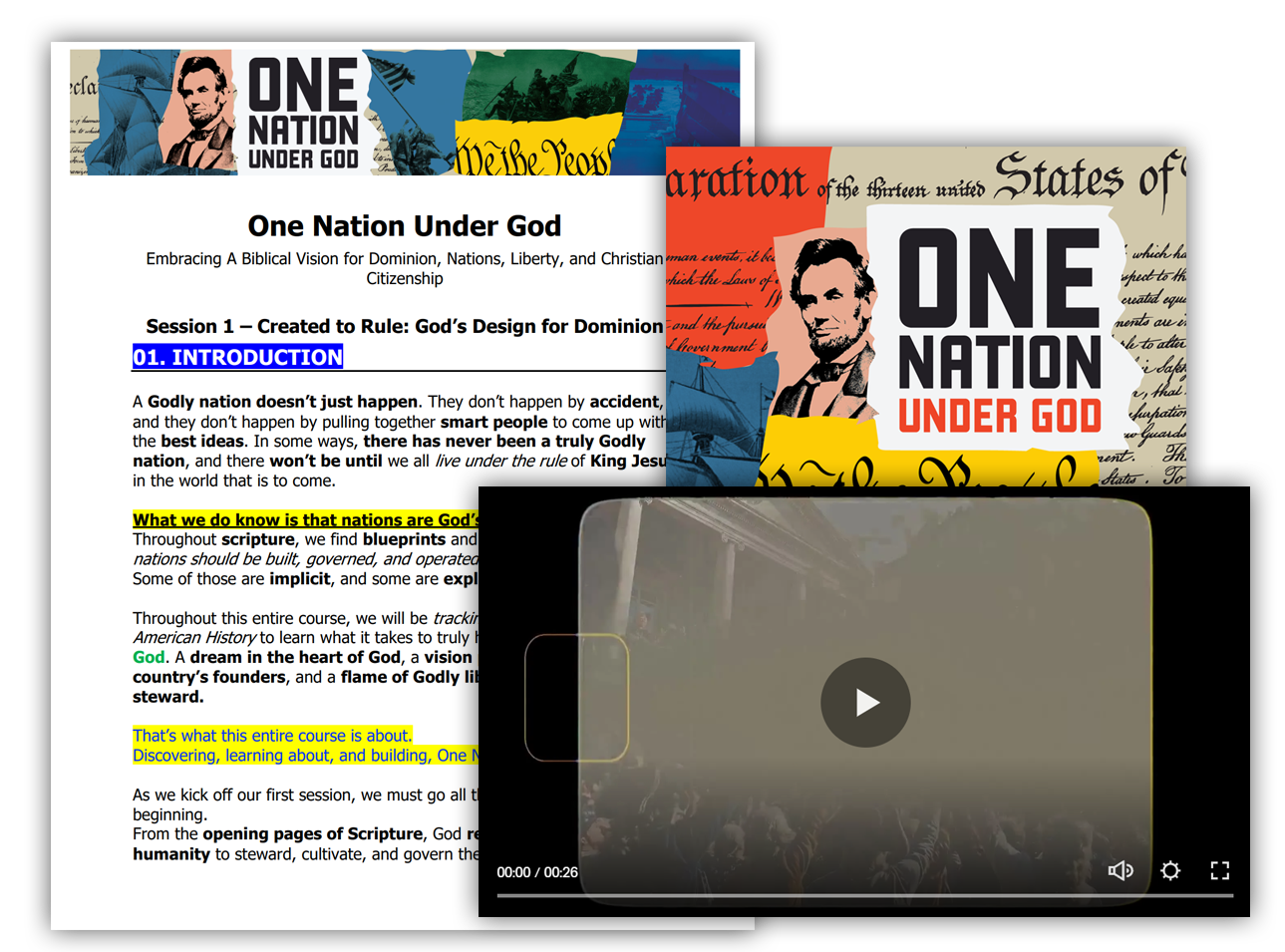
One Nation Under God is a discipleship course designed to recover a biblical understanding of dominion, nations, liberty, and responsibility. Together, we will explore God’s design for governance, the role of nations in His plan, the Christian roots of American freedom, and why faithful discipleship cannot be separated from faithful citizenship.
This course is not about partisan politics. It is about biblical clarity, historical truth, and obedient living.
-
From the opening pages of Scripture, God reveals His design for humanity to steward, cultivate, and govern the earth under His authority. In this foundational session, we explore the Dominion Mandate given in Genesis and what it means to rule responsibly rather than dominate destructively. We will clarify the biblical call to stewardship, fruitfulness, and multiplication, and why disengagement from the world God created is not faithfulness but abdication. We will explore the primary spheres of culture that shape societies today and see how biblical stewardship expresses itself practically through influence in everyday life, not through control or coercion, but through faithful presence, truth, and service. In later sessions, we will explore several of these spheres more deeply, including education and government. (NLT: Genesis 1:26–28, Genesis 2:15, Psalm 8:4–8)
-
God did not leave a fallen world without structure. In this session, we examine the rise of nations, languages, and borders, and why they are not merely the result of sin but part of God’s ordering of the world. We will address Babel, centralized power, and why Scripture affirms national boundaries as a means of restraint and stewardship. (NLT: Genesis 10–11, Deuteronomy 32:8, Acts 17:26)
-
Long before modern democracies, God revealed principles of shared leadership, accountability, and decentralized authority through Israel. This session explores how God structured governance among His people, the role of law under God, and why concentrated power always leads to corruption. (NLT: Exodus 18:13–26, Deuteronomy 16:18–20, 1 Samuel 8)
-
Jesus did not preach a privatized faith or establish a hidden spiritual movement. He announced a Kingdom and formed an ecclesia, a governing assembly called to represent His authority in the world. This session explores what Jesus meant when He said He would build His Church and how the Great Commission calls us to disciple nations, not merely individuals. (NLT: Matthew 16:18–19, Matthew 28:18–20, Revelation 1:6)
-
Liberty did not emerge by accident. In this session, we trace how biblical truth shaped ideas of freedom, conscience, law, and human dignity. We will examine why liberty requires virtue, why truth precedes freedom, and how Christian theology laid the groundwork for free societies. (NLT: John 8:32–36, Galatians 5:1, 2 Corinthians 3:17)
-
Why did the early settlers come to America, and what kind of society were they trying to build? This session explores the Pilgrims, covenant theology, the Mayflower Compact, and early experiments with communal living. We will see how biblical self-government shaped early American communities and why responsibility preceded rights. (NLT: Deuteronomy 29:10–15, Psalm 33:12, Proverbs 14:34)
-
Education has always shaped culture. In this session, we examine why public education in America began as a Bible-centered project, how laws like the Old Deluder Satan Act sought to protect biblical literacy, and why moral formation was seen as essential to liberty. We will also discuss what happens when education is severed from Scripture. (NLT: Deuteronomy 6:4–9, Psalm 78:1–7, Proverbs 22:6)
-
Christian pastors played a central role in shaping America’s resistance to tyranny. This session explores election sermons, resistance theology, and the biblical limits of obedience to civil authority. We will confront the modern myth that pastors should remain silent on public issues and recover the prophetic role of the church. (NLT: Romans 13, Acts 5:29, Isaiah 10:1–2)
-
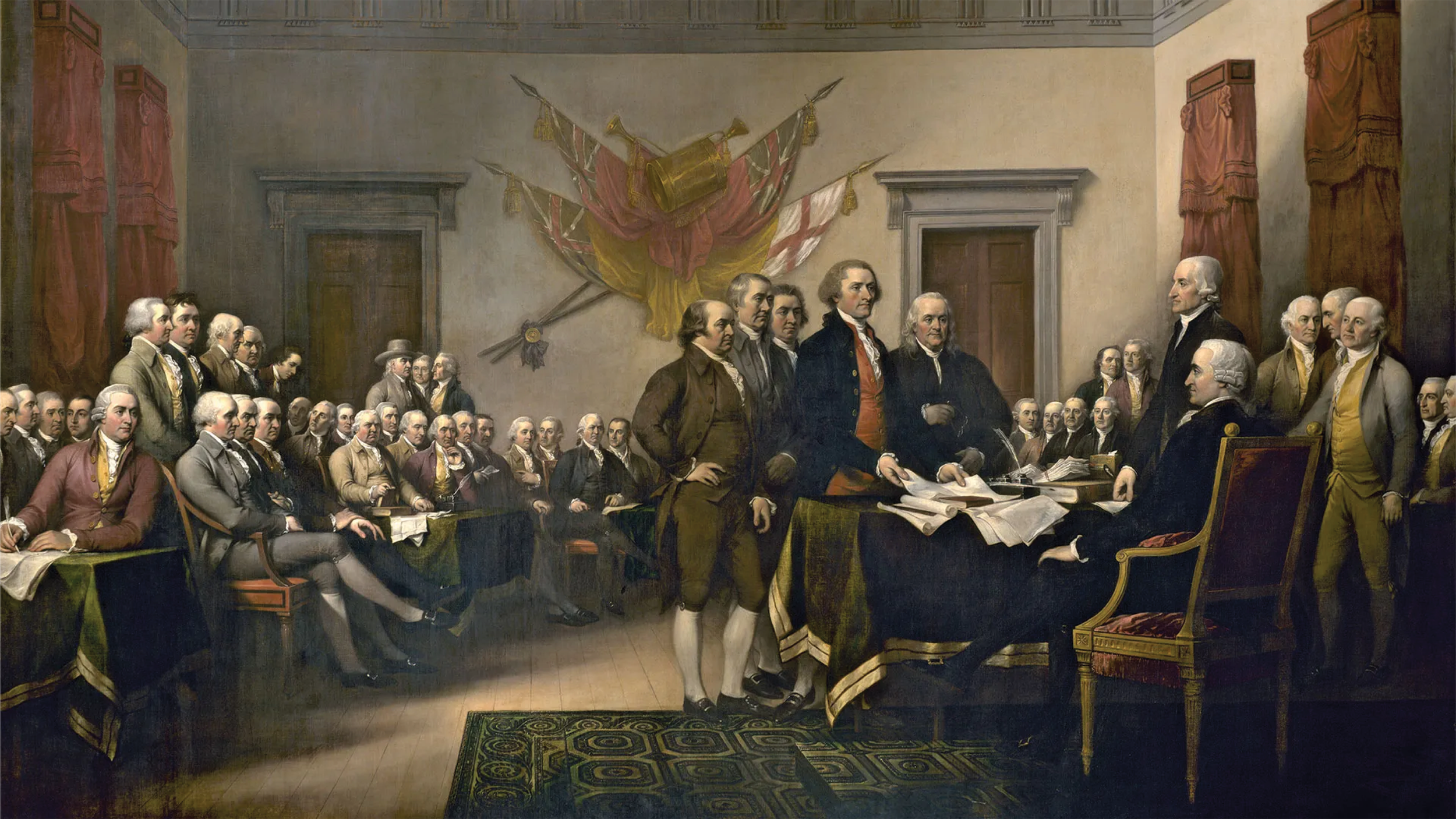
The U.S. Constitution reflects a sober understanding of human nature and the dangers of unchecked power. In this session, we explore separation of powers, checks and balances, original intent, and why the rule of law depends on biblical assumptions about sin, authority, and accountability. (NLT: Jeremiah 17:9, Isaiah 33:22, Exodus 18:21)
-
Discipleship does not end at the church door. In this final session, we make a clear biblical case for Christian engagement in civic life. We will explore what faithful presence looks like in a fallen world, reject both apathy and idolatry, and call believers to steward influence for God’s glory and the good of their neighbors. (NLT: Matthew 5:13–16, Jeremiah 29:7, Esther 4:14)
New messages Every Wednesday at 6:30PM!